Almost everyone comparing Bainbridge Island and Gig Harbor starts the same way: pull up the typical values, subtract, and pick. Eighteen months later, the people who chose wrong aren't unhappy about the money. They're unhappy about how their week feels. These aren't two versions of the same town. They sit in different counties, on different sides of Puget Sound, with completely different ways of reaching the rest of the region. Here are the drivers that actually decide it.
Start with the price gap, then look past it
Zillow put Bainbridge Island's typical home value at about $1.17M in September 2026 and Gig Harbor's at about $811K, a gap of roughly $360,000. On the surface, that's a Gig Harbor win. But the two markets are built differently. Bainbridge is a single city covering an island with about 27.6 square miles of land, a good share of it parks and protected open space. Nobody is making more of it. The greater Gig Harbor area, by contrast, still has subdivisions coming online and new construction adding rooftops.
In my experience that shapes how each market moves. Scarcity tends to make Bainbridge the slower elevator: it doesn't drop as far in a soft stretch, and it doesn't climb as fast in a strong one. Gig Harbor has more supply to absorb a downturn and more room to run in a recovery. Neither is a guarantee. It's the trade you're buying along with the sticker price.
One village core versus a town of neighborhoods
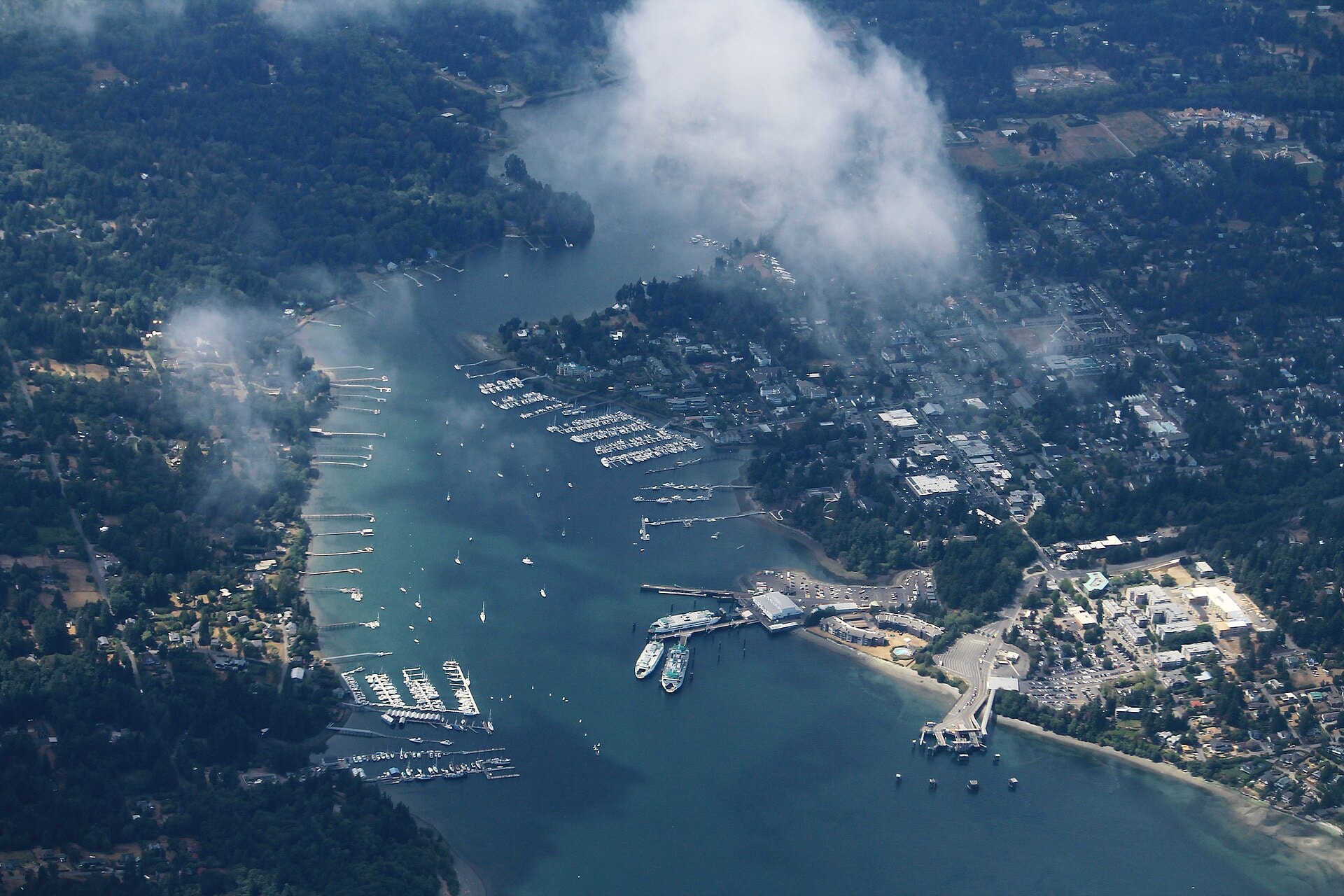
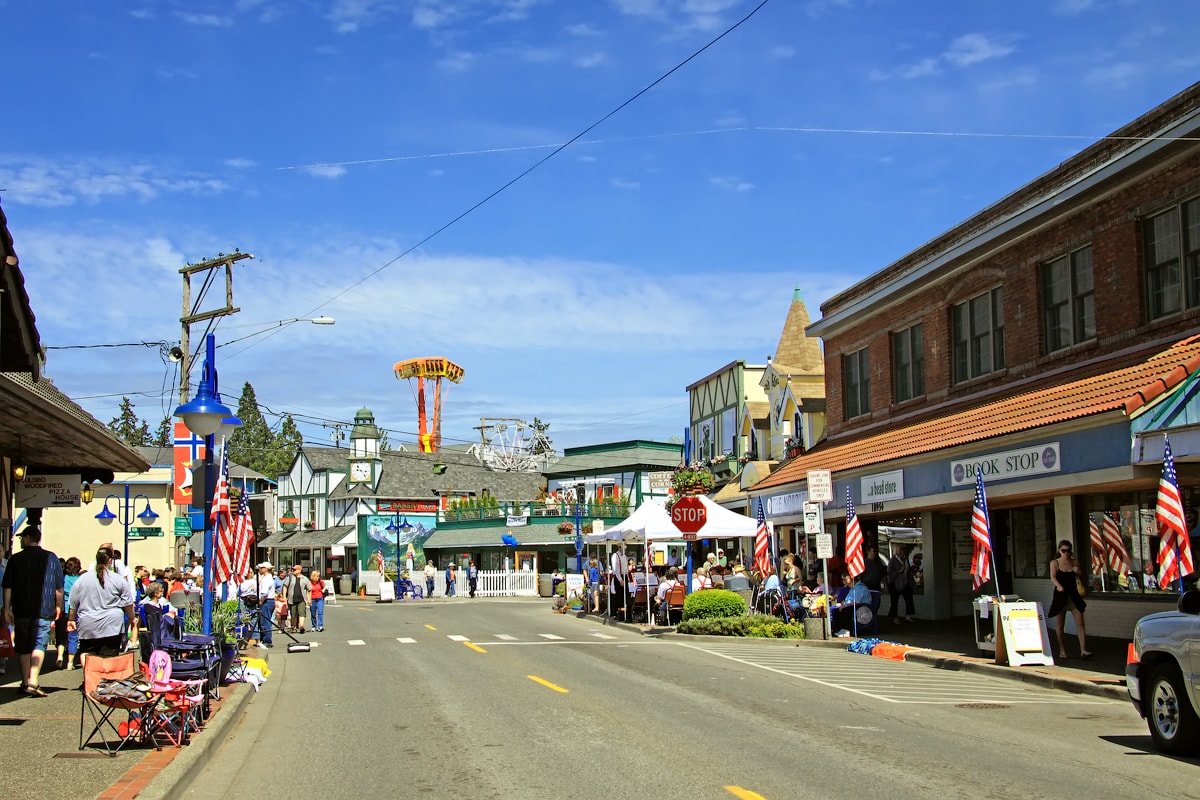
Bainbridge has one downtown, Winslow: a compact, walkable stretch of shops, restaurants, the library, and the ferry terminal. You can park once on a Saturday and spend the day on foot, and the whole island feeds into that core.
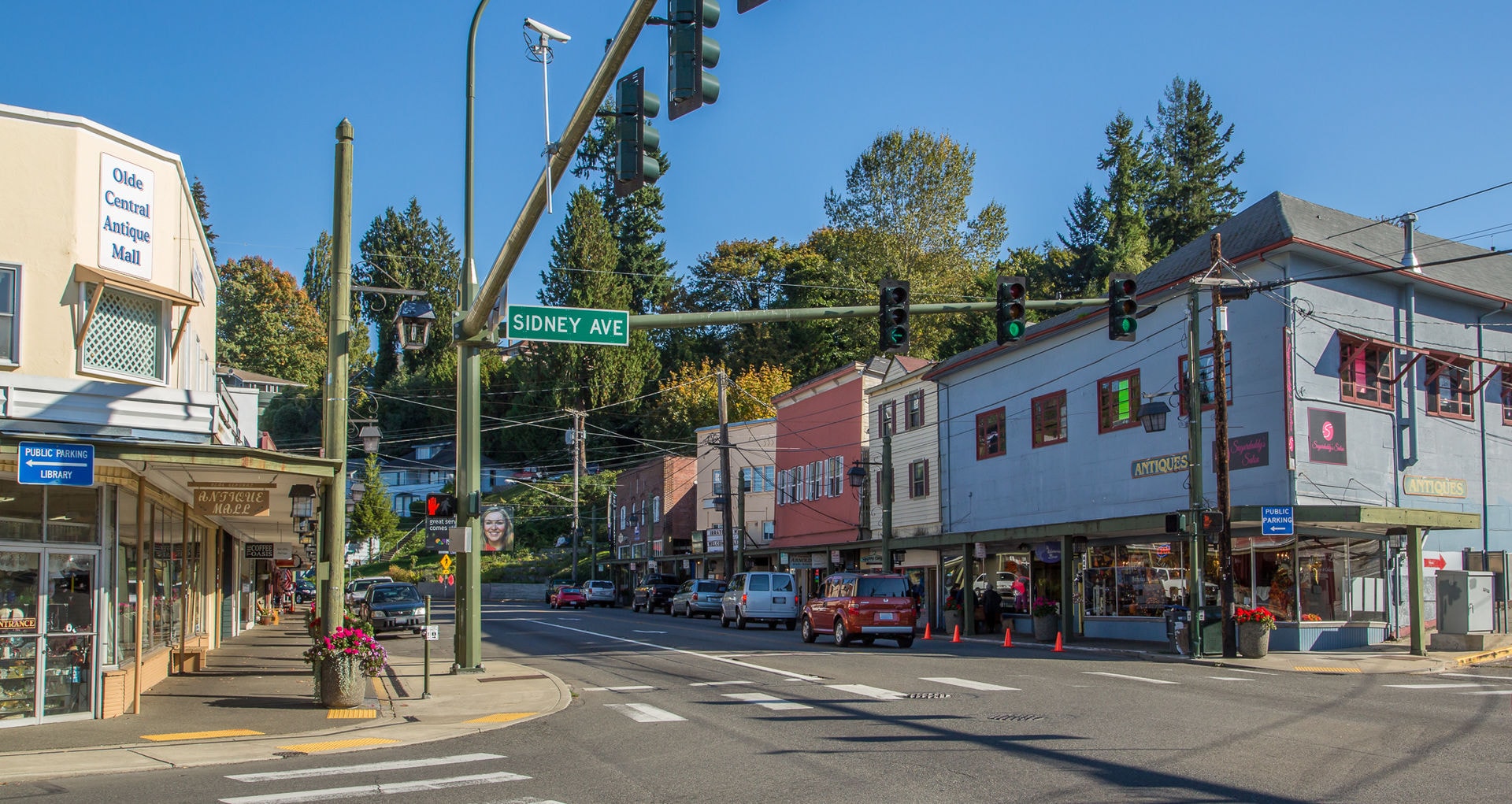
Gig Harbor is a different shape. The historic waterfront along the harbor is beautiful and walkable, but the area sprawls. Uptown has the larger stores, Canterwood is a gated golf community, Gig Harbor North has newer construction, and places like Rosedale, Wollochet, and Arletta all carry the Gig Harbor name without sharing one downtown. The question isn't whether you want a cute downtown; both have one. It's whether you want your whole life organized around a single village core, or neighborhoods that feed into several commercial centers. Get that wrong and you'll spend the first year quietly frustrated without knowing why.
Ferry or bridge: the driver that predicts who stays
Bainbridge connects to Seattle by Washington State Ferries, a crossing of about 35 minutes into downtown. As of late October 2026, an adult walk-on fare is $11.35, collected westbound only, and a standard car and driver is $20.25 each way, more in the summer peak season. There's a bridge off the north end of the island, but it leads to the Kitsap Peninsula, not Seattle. For getting into the city, the boat is the architecture.
Gig Harbor's link is the Tacoma Narrows Bridge, open around the clock and tolled eastbound only: $4.50 with a Good To Go pass, $5.50 at the booth, $6.50 by mail. There's no ferry option. You drive.
That's where the lifestyles split. The ferry is a passive commute: you sit down with a laptop or a book and step off downtown without touching a steering wheel. You're also on a schedule; miss a sailing and you wait for the next one, and holiday weekends bring lines. The bridge is an active commute: you're driving and paying the toll, but you leave when you want. If you go into Seattle a few times a month, the ferry feels like a ritual you'll enjoy. If your job is in Tacoma, Olympia, or at Joint Base Lewis-McChord five days a week, the bridge is your friend. If it's downtown Seattle every weekday, the ferry is a luxury commute you'll either love for years or resent within eighteen months. Be honest about which you are.
Two counties, two tax bills
Bainbridge is in Kitsap County; Gig Harbor is in Pierce County. Property tax in both is a stack of overlapping districts, and the stack changes from parcel to parcel, so neither town has one rate. Don't compare averages. Pull the actual tax record for each specific address you're considering and put both bills in your budget. And remember that Bainbridge's higher prices can mean a higher tax bill in dollars even where the rate looks similar.
Some lines match exactly. For October through December 2026, the Department of Revenue lists the same 9.2% combined sales tax in Bainbridge Island and in Gig Harbor, and both carry the same 0.50% local share of the real estate excise tax.
Waterfront means different things on each side
The word waterfront in your search filter doesn't describe the same product in both places. Bainbridge waterfront is mostly open Puget Sound: west-facing toward the Olympics or east toward Seattle and, on a clear day, Mount Rainier, with real tidal swing, mixed rock and sand beaches, and tightly regulated shoreline development.
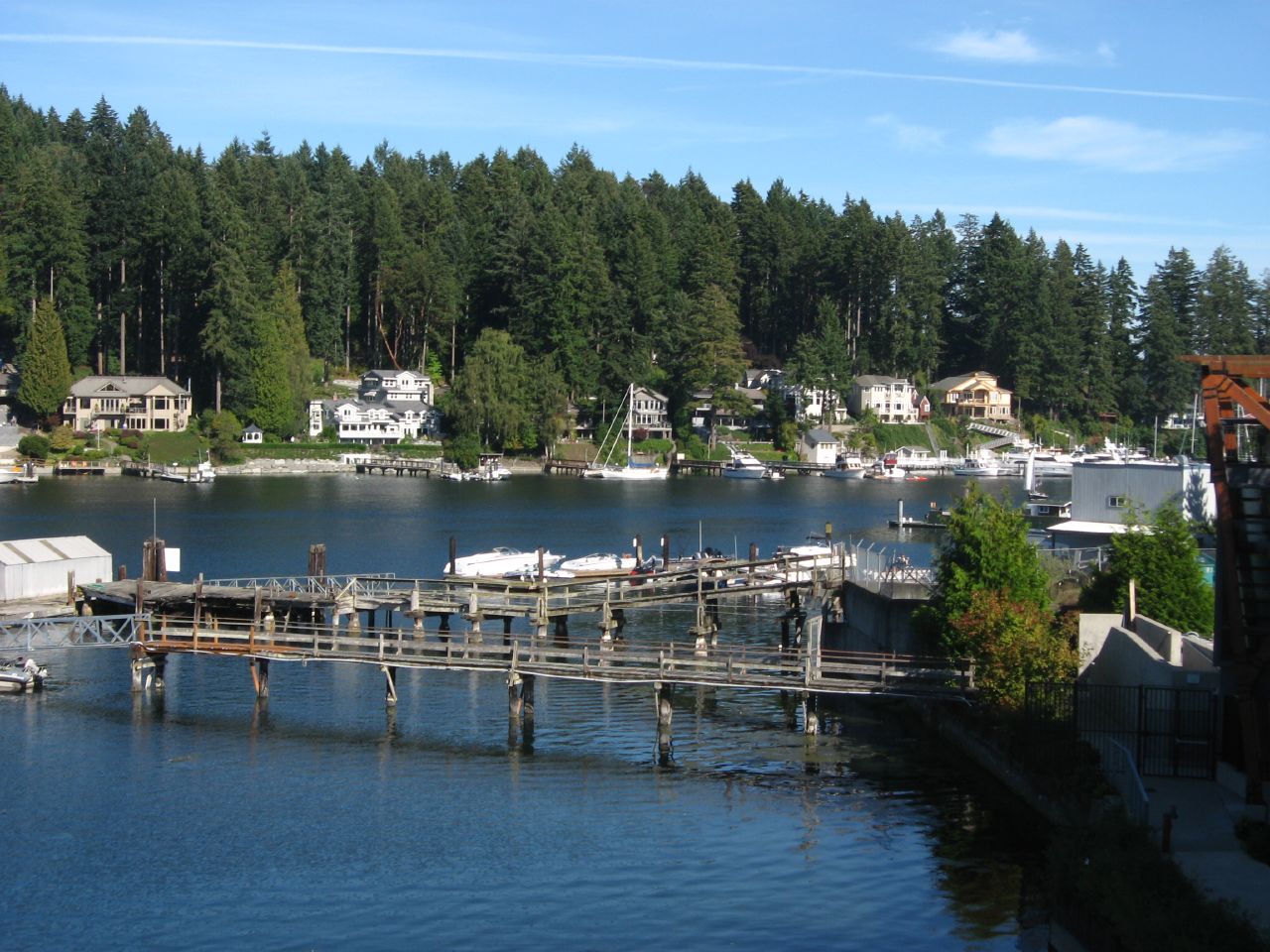
Gig Harbor's signature waterfront is the harbor itself, a protected inlet off the Narrows with calm water and boats at moorage, often within walking distance of restaurants. Then there are Henderson Bay, Wollochet Bay, and the Narrows-facing parcels, which feel closer to the Bainbridge open-water experience, with the bridges or Tacoma as the backdrop. Pick the waterfront experience first, then the town, or you'll spend a year searching the wrong submarket.
Schools: check the boundary, not the reputation
The Bainbridge Island School District serves the entire island with one high school. The Peninsula School District serves Gig Harbor, the Key Peninsula, and surrounding unincorporated Pierce County, with several high schools, including Gig Harbor High and Peninsula High. If schools are part of your decision, the useful work is specific: confirm the attendance boundary for each address, look at the programs that matter to you, and read the state report card on the OSPI site rather than relying on a single score from a listing portal.
A four-question test
Forget the spreadsheet for a minute and answer these out loud. On your ideal Saturday, are you walking to coffee in one village core, or driving to the marina for lunch and somewhere else for dinner? On a workday, are you on a boat with a laptop or in your car with a podcast and a toll? Do you picture a house on an established street on a fixed island, or newer construction in a town that's still growing? And when you need Tacoma, the airport, or I-5, do you want a bridge you can cross any hour, or are you fine planning around a sailing?
If three of your answers land in the same column, you have your town. If you split two and two, there's a different conversation to have with whoever you're moving with, because one of you is probably buying for the lifestyle and the other for the math.
So which one wins?
Both, for different people. Bainbridge wins if you want one walkable village, open-water views, a passive ferry commute into Seattle, and a market that tends to move slowly. Gig Harbor wins if your life points south toward Tacoma and I-5, you want more housing choices and newer construction, you'd rather drive on your own schedule, or the price gap matters.
Run both through the compare tool, then put your real commute into the commute calculator at the hours you'd actually travel. The cost-of-living page will line up the tax and toll differences, and the map shows how each town sits relative to the ferry terminals, the bridge, and everything else you need to reach.