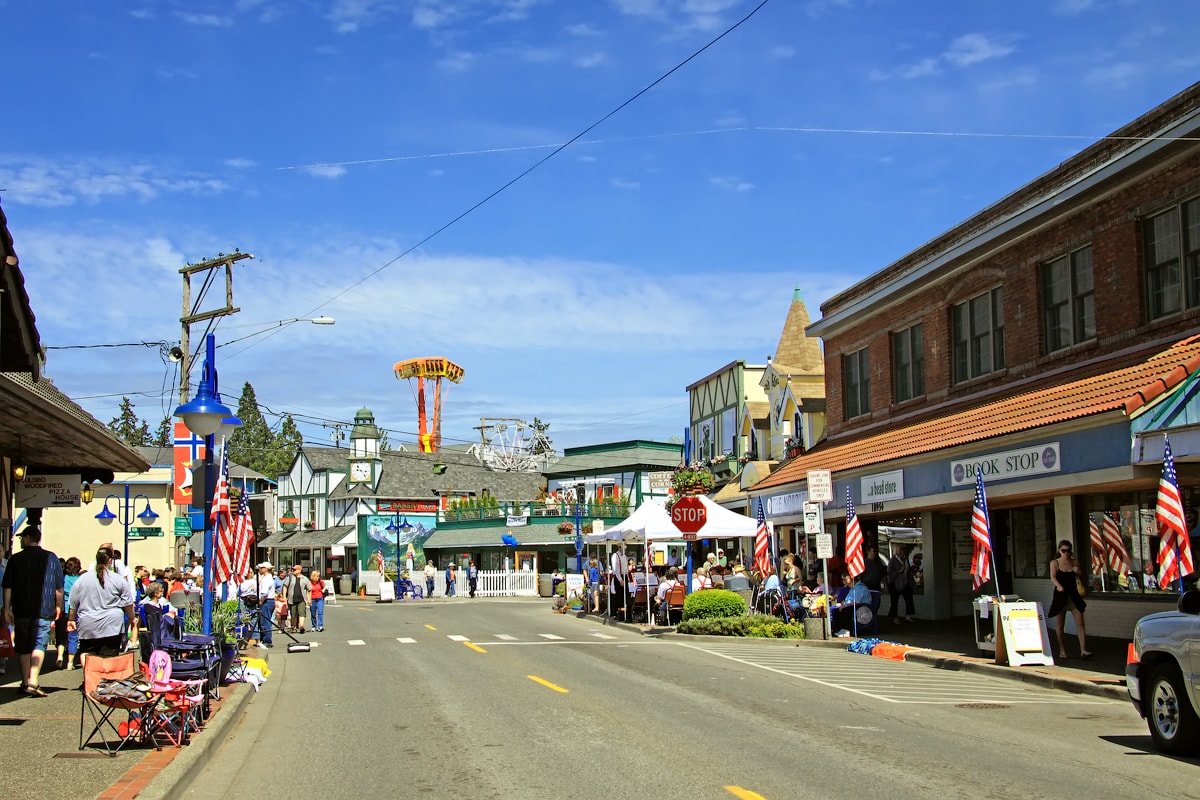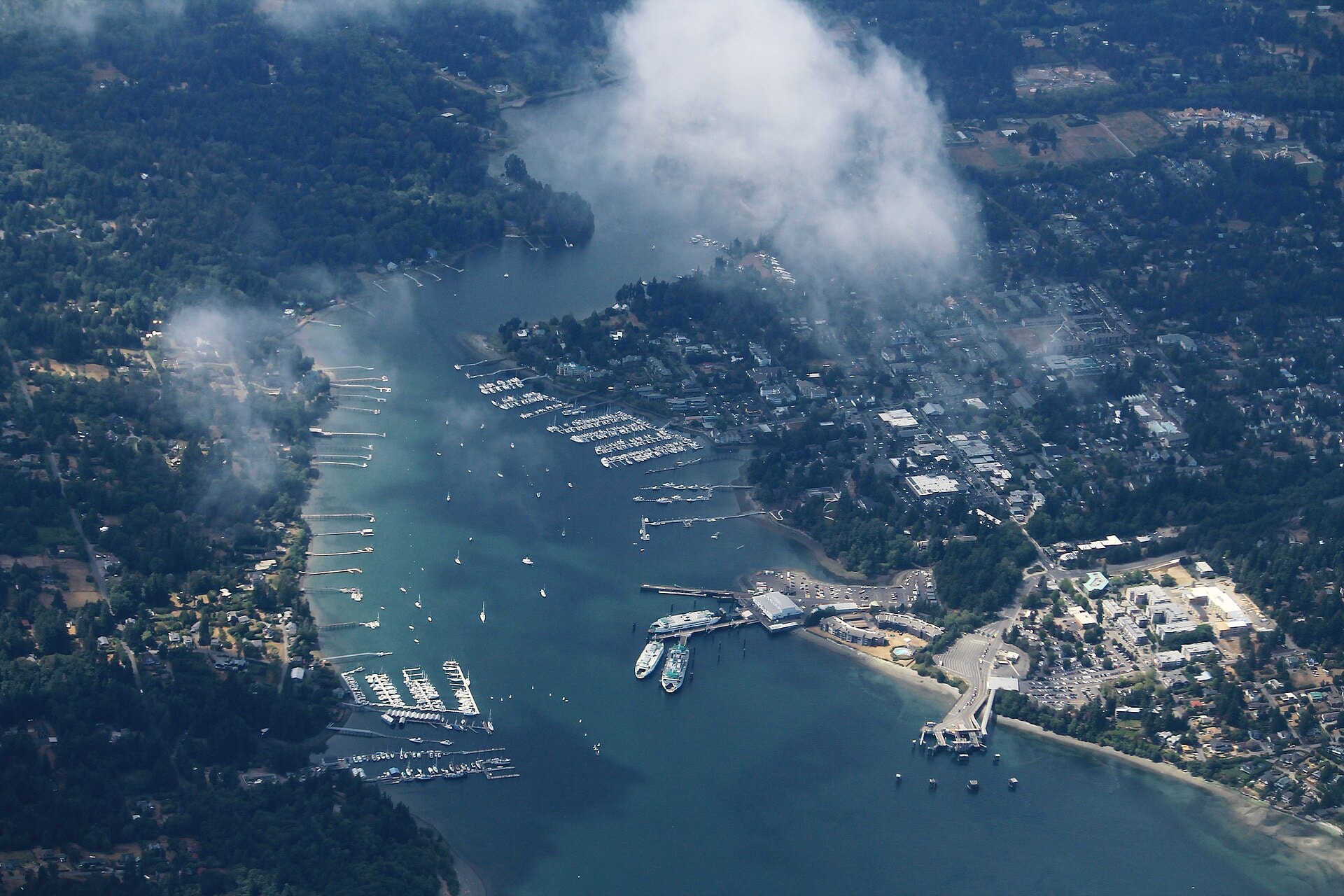
Poulsbo sells itself the moment you see it: Scandinavian rooflines on Front Street, flower baskets, boats in the marina on Liberty Bay. The brain jumps straight to small town, so it must be affordable. That's the assumption that gets people in trouble. Poulsbo can be one of the best moves in the Puget Sound region, or the most expensive affordable town you ever buy into. The difference comes down to one number most buyers don't run until they're already in escrow: the stacked monthly cost. Here's how to build it.
What daily life in Poulsbo looks like
Poulsbo is a small city on Liberty Bay in North Kitsap, with about 12,000 people at the 2020 census and steady, not explosive, growth since. Picture a compact, walkable historic downtown on a sheltered inlet, a working marina, and waterfront parks that host events all summer. Errands cluster around the grocery and shopping centers off State Route 305, and in about fifteen minutes in most directions you're into the rest of the Kitsap Peninsula, with the Olympic Peninsula's trailheads beyond that. You don't sit in twenty minutes of traffic for a gallon of milk.
The weather is classic Kitsap: cool, gray, wet winters and dry, genuinely beautiful summers. If you need year-round sun, the Northwest will test you. If a rain shell is a reasonable part of your wardrobe most of the year, you'll be fine.
Cheaper than Seattle is not the same as cheap
Most people moving from Seattle do the same math. Zillow put Poulsbo's typical home value at about $663K in September 2026, against roughly $823K for Seattle, so Poulsbo comes in around 19% lower. For context, Kitsap's county median sale price was $595,000 that month (NWMLS). If your frame is anywhere but the city, the headline looks great.
If you're coming from the Midwest or the South, though, brace yourself. Rents and prices here are lower than Seattle's and still well above what much of the country pays. I've watched couples arrive certain that a small town meant small-town prices, then recalibrate in real time once we pulled up actual listings together. The reset that helps: Poulsbo is a more reasonable version of an expensive region. Shop with that frame and you make clear decisions instead of disappointed ones.
What you keep, and what you pay
Washington has no state personal income tax, and for anyone arriving from California, Oregon, or another state with a meaningful income tax, that line simply disappears from every paycheck. It's a real structural advantage.
The state collects at the register instead. For October through December 2026, the Department of Revenue lists Poulsbo's combined sales tax at 9.3%: the 6.5% state rate plus 2.8% local. Most groceries are exempt, which softens it for everyday spending; restaurants, furniture, and the things you buy setting up a house are not. Property tax is the line people forget. Your bill depends on the parcel's specific stack of taxing districts, so pull the assessed value and tax record for the actual address from the Kitsap County Assessor rather than trusting a portal estimate. On a home in the mid-$600Ks, expect several hundred dollars a month going into your escrow account for it. Preapprovals that ignore that number feel comfortable right up until the escrow line shows up.
The market cooled, and that buys you room
A couple of years ago, Poulsbo was a feeding frenzy: multiple offers, waived inspections, homes gone in days. That market is gone. Prices have flattened rather than fallen; Kitsap's county median was up 1.8% year over year in September 2026, on 3.0 months of supply with 865 active listings (NWMLS). Fewer buyers are competing for each house, and homes take noticeably longer to sell.
What that looks like on the ground: I had buyers tour a Poulsbo home on a Tuesday, sleep on it, come back Thursday, and order a full inspection, which found a roof problem. In the old market they'd have waived the inspection to compete and inherited that roof. This time we negotiated a credit toward the replacement. That's the real value of a cooler market. It isn't a fire sale, so don't wait for a 30% drop that isn't coming. Move deliberately, with your numbers done.
The ferry math, door to door
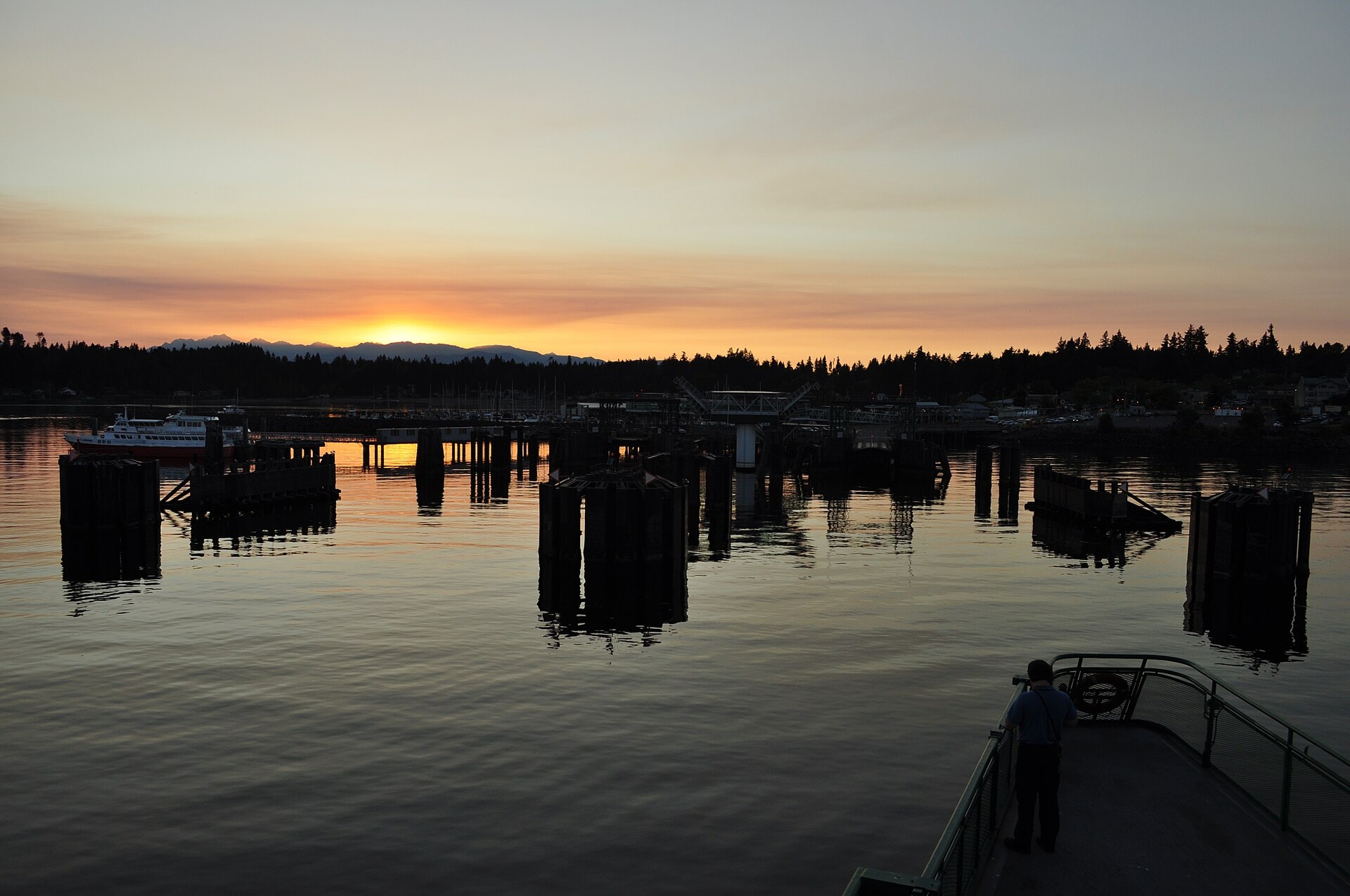
The romantic version is coffee on the water and 35 minutes to Seattle, and the crossing really is one of the nicest commutes in the country. The catch is everything before and after the boat. There's no ferry from Poulsbo itself. Your main route to downtown Seattle is to drive State Route 305 south across the Agate Pass Bridge, a steel truss span of about 1,229 feet that opened in 1950 and is the only road link from that side of the peninsula onto Bainbridge Island, to the Bainbridge terminal. That's roughly 20 to 25 minutes in light traffic and longer at rush hour, with no real alternate if the bridge is backed up.
Add a buffer so you don't miss the sailing, the crossing, and the walk to your office, and door to door is realistically an hour and a half to two hours each way. As of late October 2026, the Seattle to Bainbridge walk-on fare is $11.35, collected westbound only; a car and driver is $20.25 each way, more in summer peak season; and a 31-ride monthly passenger pass is $148.50. Walk on if you can. I had a buyer set on driving onto the boat every day until we priced car fares plus downtown parking for a year against a walk-on pass. He switched before closing.
Kingston is the other option people ask about. The Washington State Ferries route from Kingston goes to Edmonds, north of Seattle, which is great if you work in Snohomish County. For downtown Seattle from Kingston, the choice is Kitsap Transit's passenger-only fast ferry, not a car ferry.
Is Little Norway real or just paint?
It's real. Norwegian and other Scandinavian settlers came here in the late 1800s and early 1900s, and Liberty Bay's fjord-like setting was part of the draw. Walk Front Street today and the bakeries and Nordic shops are actual businesses, not a theme park. Every May, Viking Fest fills downtown with a parade, food, music, and the whole town in the street, and a Sons of Norway lodge keeps the heritage going year round. If you want to know whether you'll like the community, go stand on Front Street during Viking Fest. You can buy square footage anywhere; a place with its own calendar and identity is much harder to find.
Schools and jobs, as logistics
Poulsbo is served by the North Kitsap School District, which runs multiple campuses, so attendance boundaries matter and a few blocks can change the assignment. Confirm the boundary for any address you're serious about, tour the schools in person, and read the district's own information and the state report card.
Poulsbo also isn't purely a bedroom town. Naval Base Kitsap at Bangor is a short drive away, and St. Michael Medical Center sits next door in Silverdale. Defense and healthcare employment on this side of the water is a big part of why demand here tends to hold steady when other markets swing.
Run the stacked number first
Here's the number I promised. Take a home around $663K. Add the mortgage at today's rate, the property tax line, insurance, the ferry and the gas to reach it if you commute, and sales tax on what you spend, then set it against the income tax you no longer pay. Each piece looks fine on its own. The stack tells the truth. And if you commute, map homes by ferry-catch time, not just price: a 12-minute drive to the terminal versus a 28-minute one is the difference between making the early sailing relaxed and watching it pull away.
If you work from home or on this side of the water, Poulsbo in a cooler market is one of the strongest moves in the region. If a five-day downtown commute is central, budget the boat and the hours honestly first. The cost-of-living page and budget planner will build your monthly stack, the commute calculator shows door-to-door time from a specific address, and the compare tool will set Poulsbo against Silverdale, Kingston, or Bainbridge.