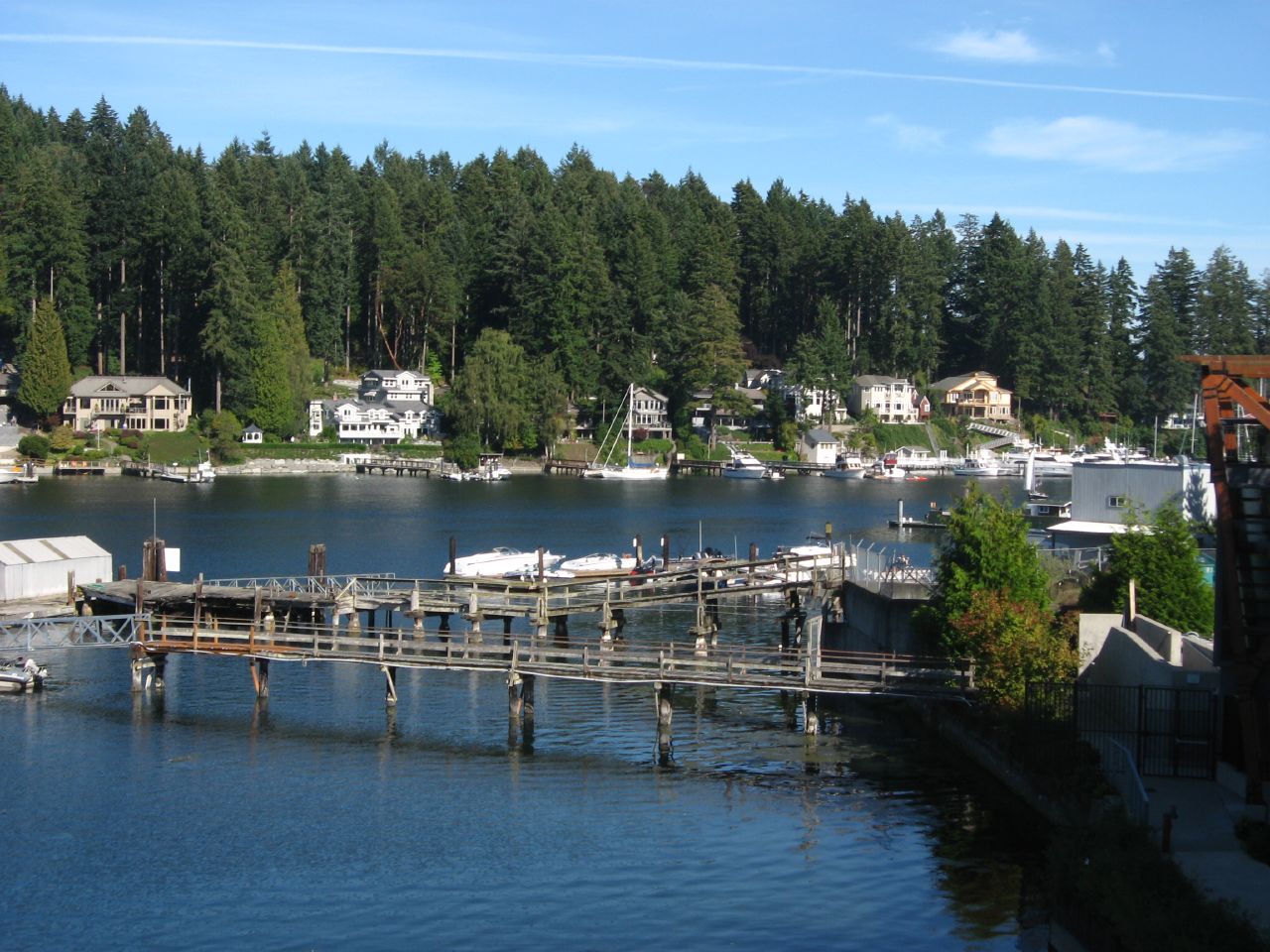
If you're planning a move to Washington from California, Texas or anywhere else, you probably already have a town in mind. Most people do, and most of them picked it from a photo: the water, the evergreens, a house that costs less than the one they live in now. That's a fine way to start dreaming and a poor way to choose. On the west side of Puget Sound, what decides whether you love the move or regret it isn't the weather. It's geography, specifically where you land relative to the water, the bridges and the ferries. Get that right and this region is extraordinary. Get it wrong and you can spend two years of your life in a line. This is the order I walk relocating buyers through, before they ever open a listing.
Start with your weekday, not the listing photo
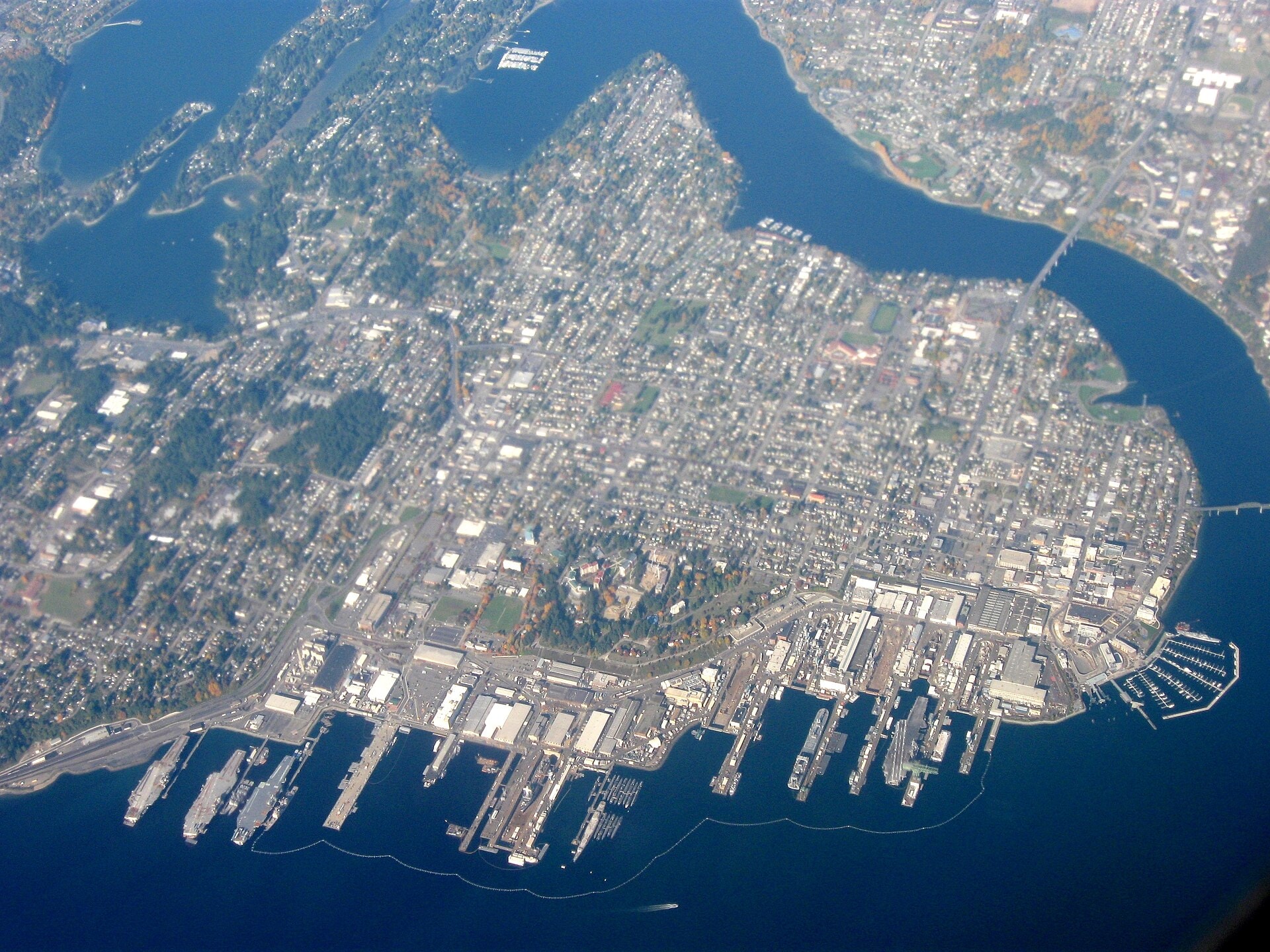
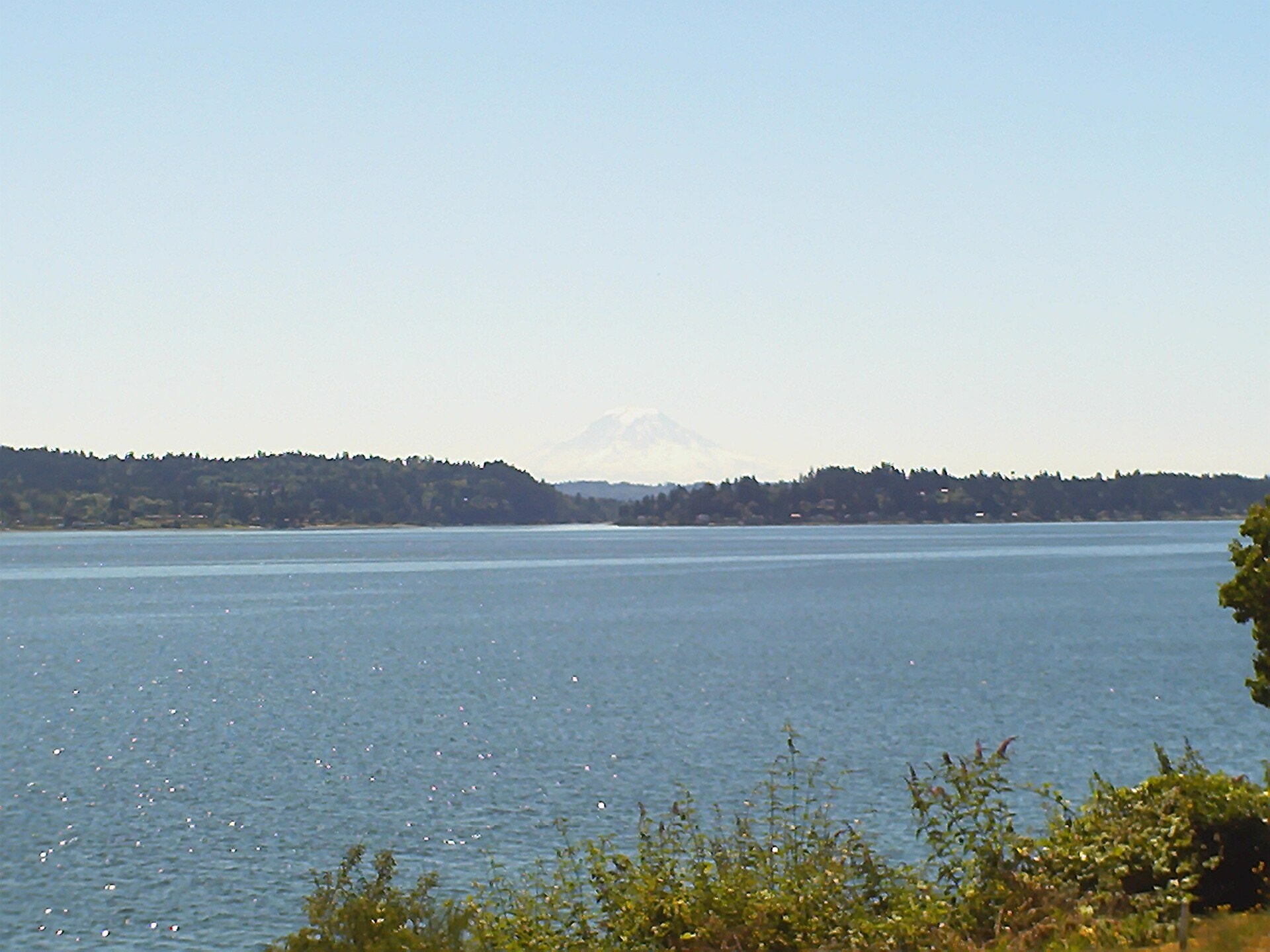
What a listing photo never shows is that Western Washington is cut into pieces by water. Kitsap County, Gig Harbor, the Key Peninsula and the Hood Canal shoreline all sit across the Sound from Seattle, and every trip between the two sides goes over a ferry or around through the Tacoma Narrows Bridge. Two houses ten miles apart on a map can produce completely different weeks, so the first question isn't which town is prettiest. It's which side of each chokepoint your normal week needs to be on.
Before you look at a single house, write down where you need to be on an ordinary Tuesday and how often. Downtown Seattle three days a week. The shipyard in Bremerton every morning. Tacoma twice a week. Naval Base Kitsap at Bangor. A hospital shift in Silverdale. Or nowhere at all, because you work from home.
If Seattle is on that list, you have three options from this side of the water: take the ferry, drive around through Tacoma, or don't go. Those are wildly different lives, and most of the decision about where to live comes down to which of the three you're signing up for.
Then decide what you want the house to do for you: land, a walkable downtown, water, a newer floor plan, or simply a lower payment. Price comes third. Answer in that order and half the map eliminates itself, which is exactly what you want when you're shopping from a thousand miles away. Buyers who reverse it usually end up owning a commute they never tested.
The three chokepoints that sort the map
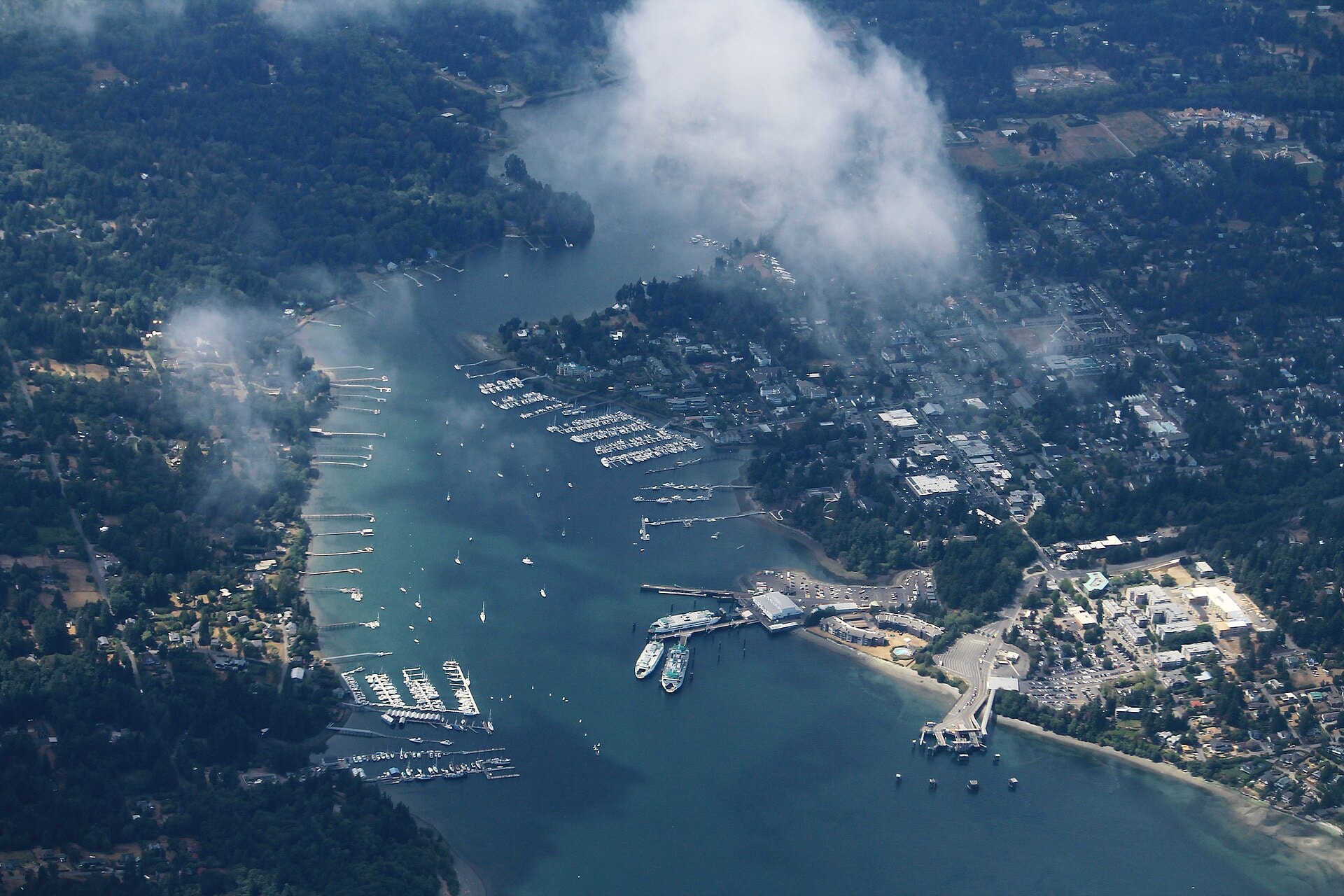
The ferry terminals come first. Washington State Ferries runs car ferries to Seattle from Bremerton and Bainbridge Island, and Kitsap Transit runs passenger-only fast ferries from Bremerton, Kingston and Southworth. If downtown Seattle is part of your week, how far you live from one of those docks, and which dock it is, matters more than almost anything about the house itself.
The Tacoma Narrows Bridge is the second. State Route 16 over the Narrows is how Port Orchard, South Kitsap and Gig Harbor reach Tacoma, I-5 and the long way around to Seattle. WSDOT tolls it only in the direction of Tacoma: $4.50 with a Good To Go pass, $5.50 at the booth and $6.50 by mail for a standard two-axle vehicle. The toll is the predictable part. The traffic at your hour is not.
Gorst is the third, and almost nobody from out of state has heard of it. It's where SR 3 and SR 16 meet at the head of Sinclair Inlet, and most north-south trips between South Kitsap and Bremerton, Silverdale or Bangor squeeze through it. Live in Port Orchard and work north of Gorst, and you cross it twice a day. Live in Bremerton and work south, and the same is true in reverse.
The affordability gap is real, and you pay for it in time
The reason most people look at this side of the water is price. King County's median sale price was $950,000 in September 2026, against $595,000 in Kitsap and $580,000 in Pierce, according to the NWMLS Local Market Update. At the town level, Zillow put Seattle's typical home value at about $823K in September 2026, compared with roughly $479K in Bremerton, $556K in Port Orchard, $602K in Silverdale and $663K in Poulsbo.
When I ran a full like-for-like comparison on my channel, the gap I landed on was roughly $392,000 for a comparable home. That's my own breakdown, not a published statistic, but the scale is right. A difference that size is the gap between a 30-year mortgage and a 20-year one, or between retiring when you planned to and retiring years earlier.
Here's the part people miss: you aren't saving that money, you're buying it, usually with time. If the cheaper house adds an hour a day door to door, that's somewhere around 230 hours a year on a five-day schedule, close to six working weeks. At two office days a week it drops under 100 hours. Those are illustrations, not measurements, but know your own number before you decide the savings are worth it.
The gap also isn't uniform. Zillow's September 2026 index put Bainbridge Island at about $1.17M, above Seattle's typical value, and Gig Harbor at about $811K, close to it. Easy access to a boat or a bridge gets priced in, so the towns with the shortest trips into the city are rarely the bargains.
The ferry is a schedule, not a road
The ferry is genuinely great when it works. You walk on, read or work, and arrive in a better mood than anyone on I-5. But it runs on a timetable. Miss your boat and you aren't ten minutes late, you can easily be closer to an hour late, depending on the route and the time of day.
Washington State Ferries lists the Bainbridge crossing at about 35 minutes and the Bremerton car ferry at about an hour. Kitsap Transit's Bremerton fast ferry crosses in about half an hour, but it now runs fewer boats. When temporary state funding ended, Kitsap Transit dropped seven weekday round trips starting September 1, 2026, leaving 13, with a midday stretch when no fast ferries leave Seattle for Bremerton. If a flexible office schedule is part of your plan, check the current timetable against your real calendar.
Walking on and driving on are two different budgets, too. A car and driver pays several times what a walk-on passenger does, and drive-on commuters live with vehicle lines on top of the schedule. Most daily ferry commuters walk on and keep a separate plan, a bus, a bike or a second car, for the Seattle side.
If you're fully remote, or hybrid even two days a week, this whole equation collapses in your favor and you should look hard at this side of the water. The question then shifts from the commute to internet service at the specific address, which can change from one parcel to the next once you're out in the county.
Water, distance and the dark: the honest trade-offs
Every relocation pitch shows you the sunset. Few show you February. It's darker here than most people expect, more than it's rainier. Around the winter solstice the Seattle area gets roughly eight and a half hours of daylight, with sunset around 4:20 in the afternoon. Some people love the cozy season. Some never adjust. Decide honestly which one you'll be before you sign anything.
Things are also further apart than they look on a map. That waterfront house twenty minutes from the grocery store is twenty minutes from the grocery store every single time, and the same goes for the pharmacy, the hardware store and the emergency room. Price the distance to the things you do every week, not just the commute.
And water is expensive. Waterfront, view and ferry-convenient homes carry a premium here for the same reason they do anywhere: everyone wants them. If your budget is built on the affordability gap and your heart is set on water, those two are going to have a conversation. Have it before you tour, not after you've fallen for a house.
None of that is a reason not to come. It's a reason to come with your eyes open. The people who move here knowing about the dark Februaries and the ferry schedule are the ones who stay.
So where should you start looking?
If downtown Seattle is most of your week, start near a dock: Bainbridge Island, Bremerton close to the terminal, or Kingston at the north end of the county. The thing to test is the boat schedule against your real calendar, including the trip home.
If Tacoma or the I-5 corridor south of it is where you work, start at the south end: Port Orchard, Olalla and Gig Harbor all sit on the SR 16 side of the map. The thing to test is the Narrows Bridge at your actual departure time.
If you report to Bangor or work in Silverdale, Silverdale, Poulsbo and Central Kitsap keep the drive short. If the shipyard in Bremerton is your workplace, Bremerton itself, Port Orchard by way of the foot ferry across Sinclair Inlet, and Silverdale are the usual short list. The thing to test is SR 3 at shift change, and Gorst if you're coming from the south.
If you don't commute at all, the map opens up to Hood Canal and Mason County, where Zillow put Belfair's typical home value around $478K and Shelton's around $419K in September 2026. The thing to test there is internet at the exact address and how far you'll drive for groceries and medical care.
Run the Tuesday-and-Friday test
This is the single most useful thing I can give you, and it costs nothing. Before you buy anywhere over here, drive or ride your actual commute at your actual departure time, twice: once on a Tuesday and once on a Friday.
Not on a Sunday while you're touring, and not on a relocation trip when everything feels like vacation. Go door to door, including the drive to the terminal and the wait for the boat, and make the return trip in the evening as well, because that's where schedules and bridge traffic bite.
If Friday looks nothing like Tuesday, decide which one you can live with every week. That one test has changed more of my clients' minds than every spreadsheet I've ever built for them.
Your next step: narrow the map, then the houses
Start with the quiz on this site. It takes about thirty seconds, doesn't ask for an email, and matches what you actually need, from commute to budget to how rural you're willing to go, against the towns on both sides of the water. Most people come in certain about one town and leave looking at a different one.
Then put your real workplace into the commute calculator, run your two or three finalists through the compare tool, and check the cost-of-living page so your budget covers more than the mortgage. Once you have a short list and a timeline, the city guides go deeper on each town, and that's the point where a conversation about specific neighborhoods actually pays off.