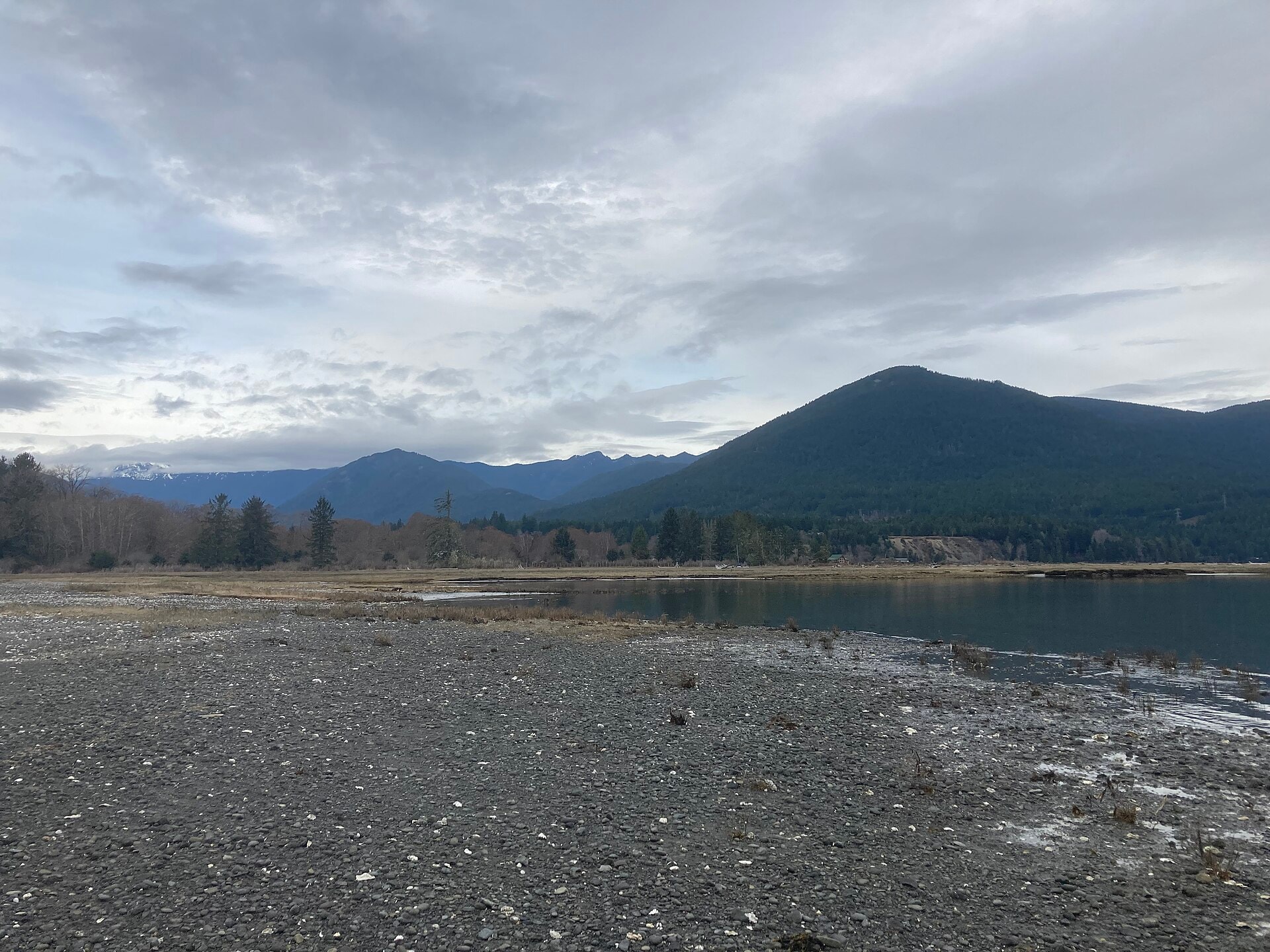
Journey's End — the log estate on 1.71 waterfront acres in Seabeck — is a beautiful place to fall in love with. It's also a useful teaching tool, because buying waterfront on Hood Canal comes with a due-diligence list that a comparable inland home never does. Whether or not this particular estate is the one, here's what I walk waterfront buyers through before they write an offer.
Find out what you actually own down to the water
The first question on any waterfront parcel: do you own the tidelands, or just the upland? In Washington, second-class tidelands were often sold off separately, so it's entirely possible to own the beach house but not the beach in front of it. That affects moorage, what you can build, and even who can walk your shoreline. Pull the title and a survey and confirm exactly where your ownership ends — the mean high water line, the extreme low tide line, or somewhere the plat spells out. Don't assume the lawn and the beach convey together.
Shoreline rules, bulkheads, and what you can't change
Waterfront falls under Washington's Shoreline Management Act and county critical-area rules, and they're strict. Existing bulkheads (the retaining walls that armor the shore) may be grandfathered but hard or impossible to rebuild the same way — the state now pushes 'soft armoring' and setbacks. Before you count on adding a deck, a stairway to the beach, or a new bulkhead, find out what's actually permittable. On an estate like Journey's End, part of the value is that the shoreline improvements already exist and are established; recreating them from scratch elsewhere can be a multi-year permitting saga.
Wells, septic, and the systems town buyers forget
Most Hood Canal waterfront is on a private well and a private septic system, not municipal utilities — and a waterfront septic gets extra scrutiny because of its proximity to the shoreline. Get the septic inspected, ask for the as-built and pumping history, and confirm the drainfield isn't crowding the water. Test the well for flow rate and quality. A large custom estate can also carry a lot of specialized mechanicals; budget for the reality that everything is a drive from the nearest trades.
Docks, moorage, and exposure
Mooring rights are a real asset and worth confirming precisely: a shared community mooring, a private buoy, and a permitted dock are three very different things. New docks on Hood Canal are extremely hard to permit, so existing, legal moorage carries a premium. Then think about exposure — which direction the frontage faces, how protected it is from winter wind and chop, and how the beach behaves at different tides. Visit at a low tide and, ideally, on a gray, blustery day. Waterfront that's idyllic in July can feel very different in a January southerly, and that's exactly when you want to know what you're buying.
Do this before you're emotionally committed
None of this is meant to talk anyone out of waterfront — it's the best real estate on the peninsula for a reason. It's meant to be done early, before the inspection and before you're too in love to walk away. If you're weighing an estate like Journey's End or any of the other waterfront properties on my featured listings page, this is the checklist I'd run with you, address by address.