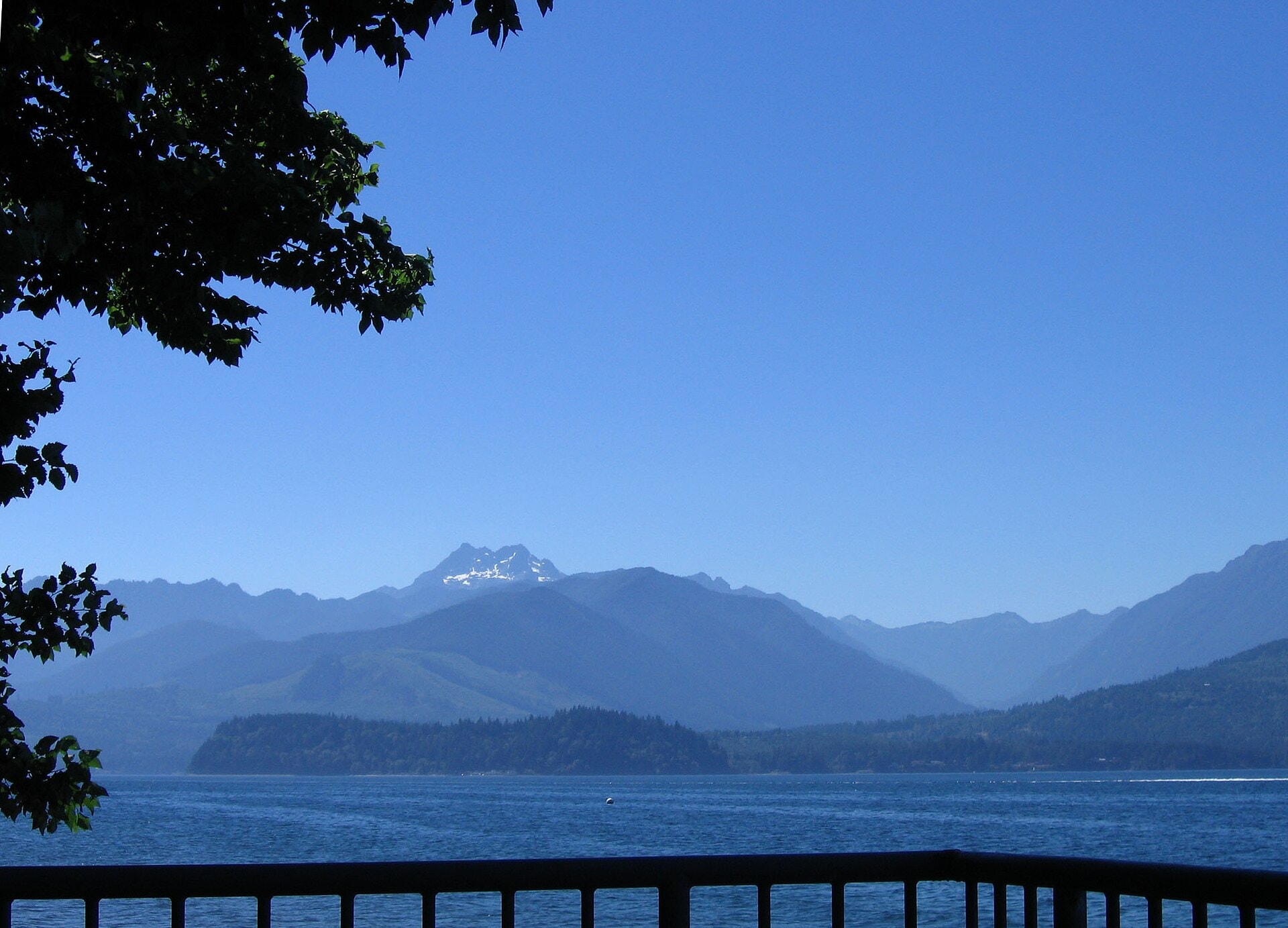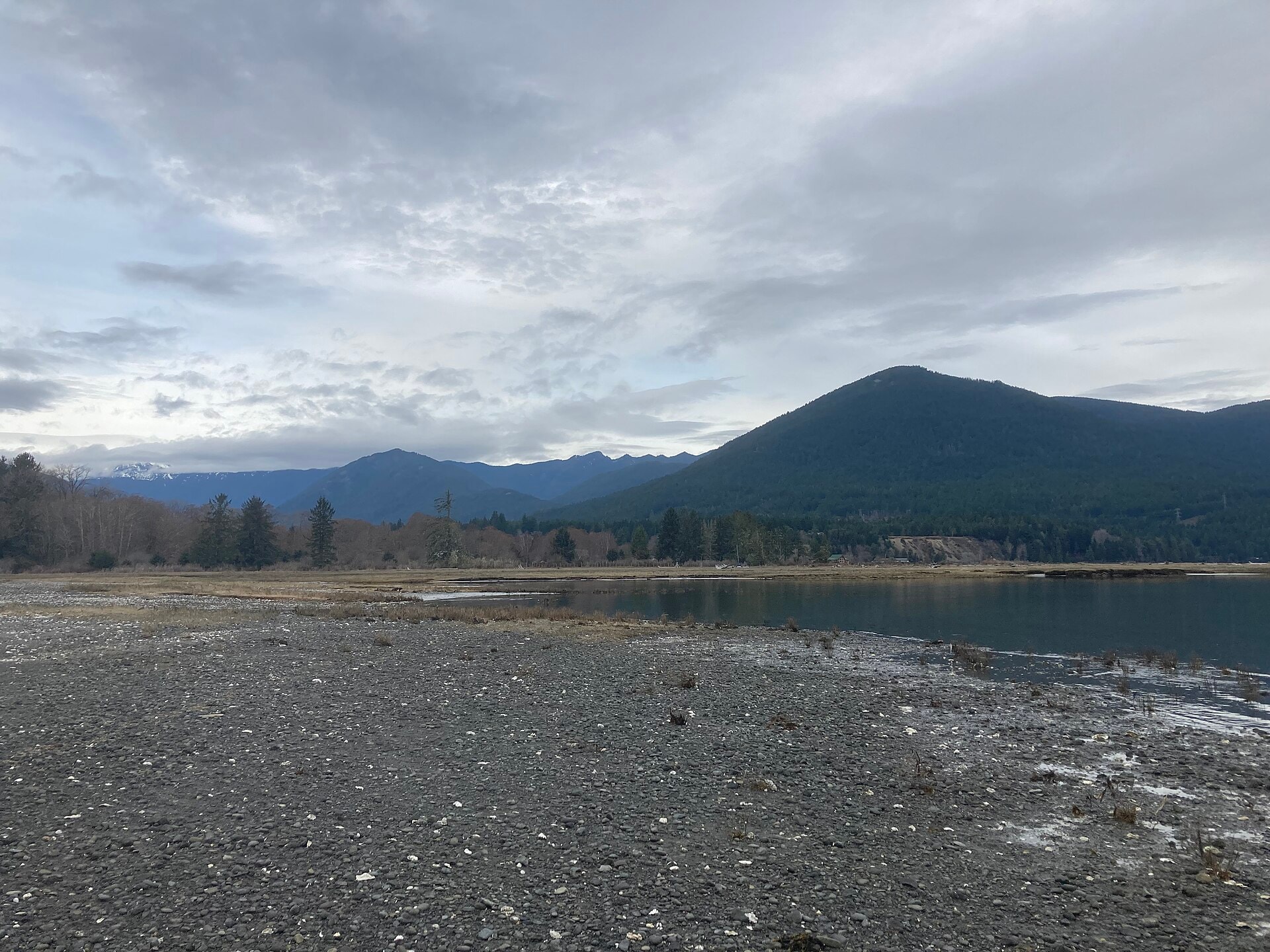
Journey's End sits on 1.71 waterfront acres at the end of Tree Top Lane in Seabeck — a handcrafted Engelmann spruce log home on Hood Canal, with the Olympics rising straight across the water. It's a striking property on its own. But what I want to talk through here is why frontage like this is genuinely rare, because once you understand that, you understand a lot about how the high end of this market prices.
Why 'low-bank' and 'no-bank' are the whole game
Not all waterfront is equal — and on Hood Canal the difference between a high-bank lot and a low-bank one can be a seven-figure gap. High-bank means the house sits on a bluff with a long, sometimes engineered path down to the water; you get the view but not easy access, and bluff stability becomes a real due-diligence item. Low-bank and no-bank frontage means you can walk from your lawn to the beach. That usable, at-grade shoreline is the scarcest thing on the Canal, and it's what commands the premium.
An estate like Journey's End is valued less on square footage than on the land underneath it: flat, usable, private frontage with real water access. That's the part you can't renovate your way into later.
What actually drives value on Hood Canal
Beyond the bank height, a handful of things move the number. Southern and western exposure for light and sunsets. A protected orientation that isn't taking the full brunt of winter wind and chop. Depth and privacy of the parcel, so you're not stacked next to neighbors. And the practical assets that are hard to add: mooring rights or a dock, deep-water moorage, and enough flat land for outbuildings. Journey's End pairs its frontage with acreage and a large shop — the kind of combination that's tough to assemble on a canal where lots are often narrow and steep.
The Olympic Mountain backdrop matters too. Hood Canal is one of the few places in the region where you get saltwater in your yard and a mountain range filling the horizon. That specific view corridor is a big part of what buyers are paying for.
Why supply stays tight
Hood Canal is a fjord — long, narrow, and mostly steep-sided — so the amount of gentle, buildable, low-bank shoreline is genuinely finite. Much of it was spoken for generations ago and rarely trades. Shoreline regulations also make it hard to create new usable frontage where it doesn't already exist. So when a true low-bank estate does come up, it's not competing against a stack of comparable listings; it's often close to one of a kind, which is exactly why so many of these sell as 'price upon request' rather than at a tidy market comp.
Seeing it in context
The best way to understand what Hood Canal frontage is worth is to look at the small handful of estates like this that are actually on the market at any given time and compare their land, not just their houses. You can see the current trophy properties I'm tracking on the featured listings page — Journey's End among them — and it's a quick education in what your money really buys at the top of this market.